
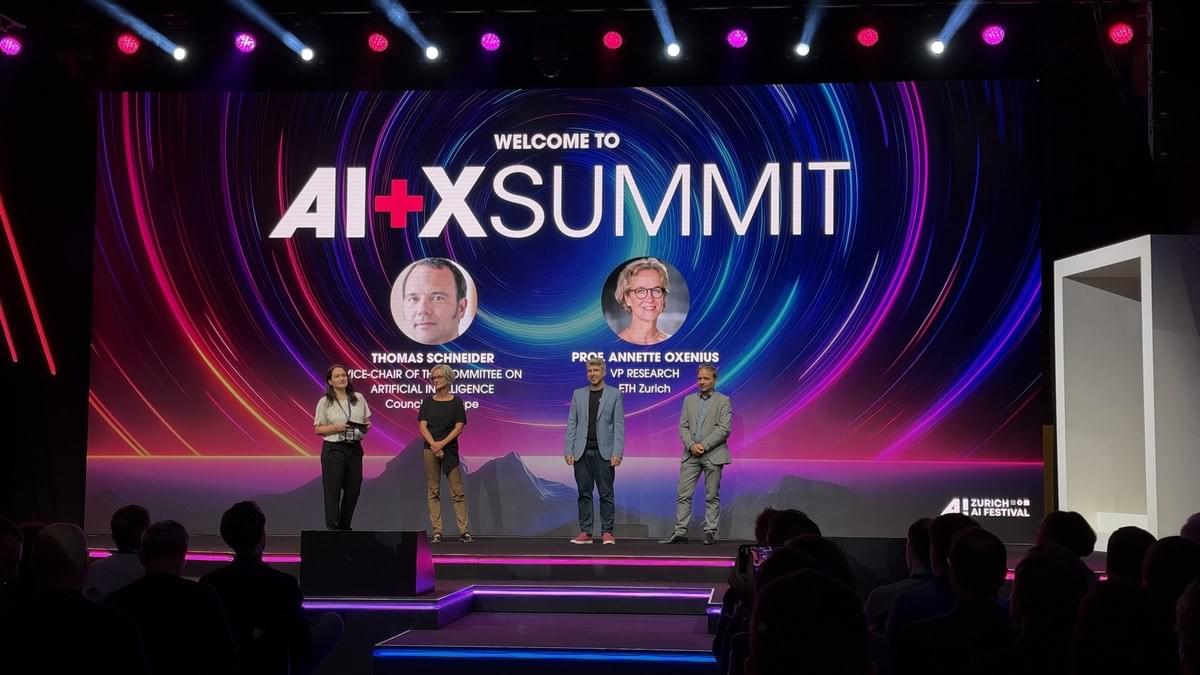
On 1 October I spent a full day at the AI+X Summit in Zurich-Oerlikon: more than 2,000 participants, over 130 speakers, parallel tracks, workshops and an innovator stage. I didn't try to see everything. I followed one question through the day: what does it actually take to get AI into organisations and to keep humans in control of it? These are my notes, in the order I collected them.
Intention, not attention
The opening keynote set the tone. Jonnie Penn (University of Cambridge) argued that we are moving from an attention economy to an intention economy. Search interfaces forced us to spell out what we want, step by step. Generative interfaces let us defer that intention, and the system completes it on its own terms.
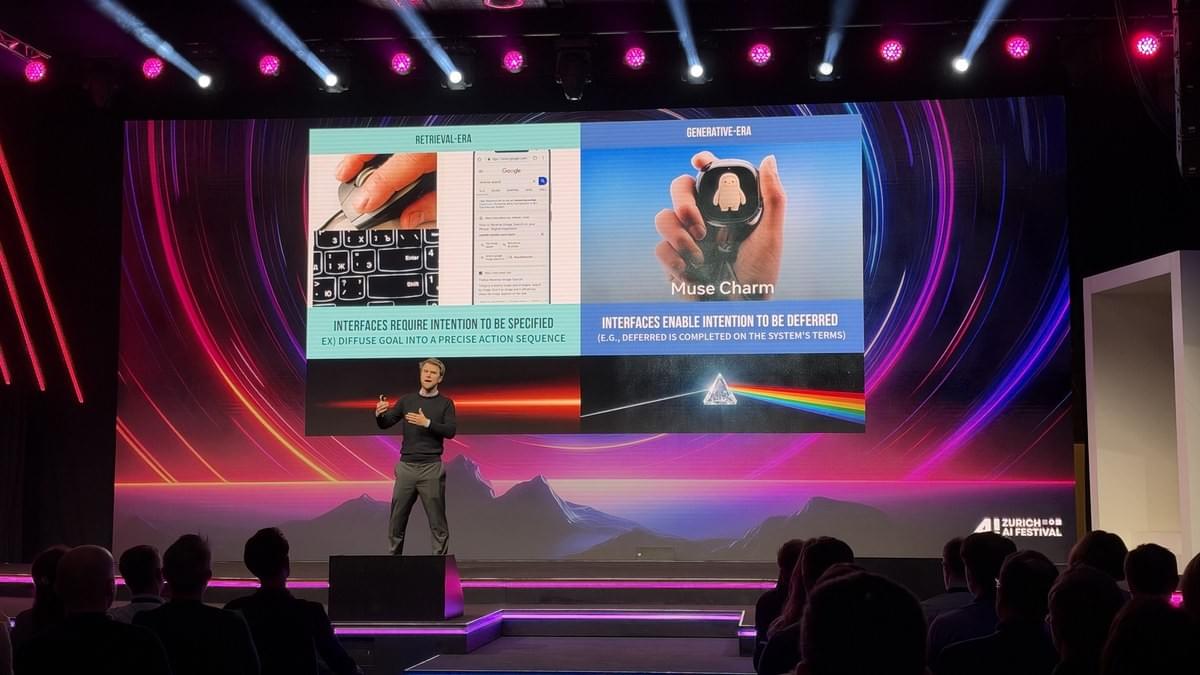
That shift matters for anyone deploying AI in a company. If a system mediates what employees or customers intend to do, the questions of who designs it, who audits it and whose interests it serves become governance questions, not just UX questions.
Right after, Heike Riel (IBM) gave a sober reminder of the physical side: compute demand for AI now doubles roughly every six months, and energy may become the limiting factor around 2030.
Robots on stage
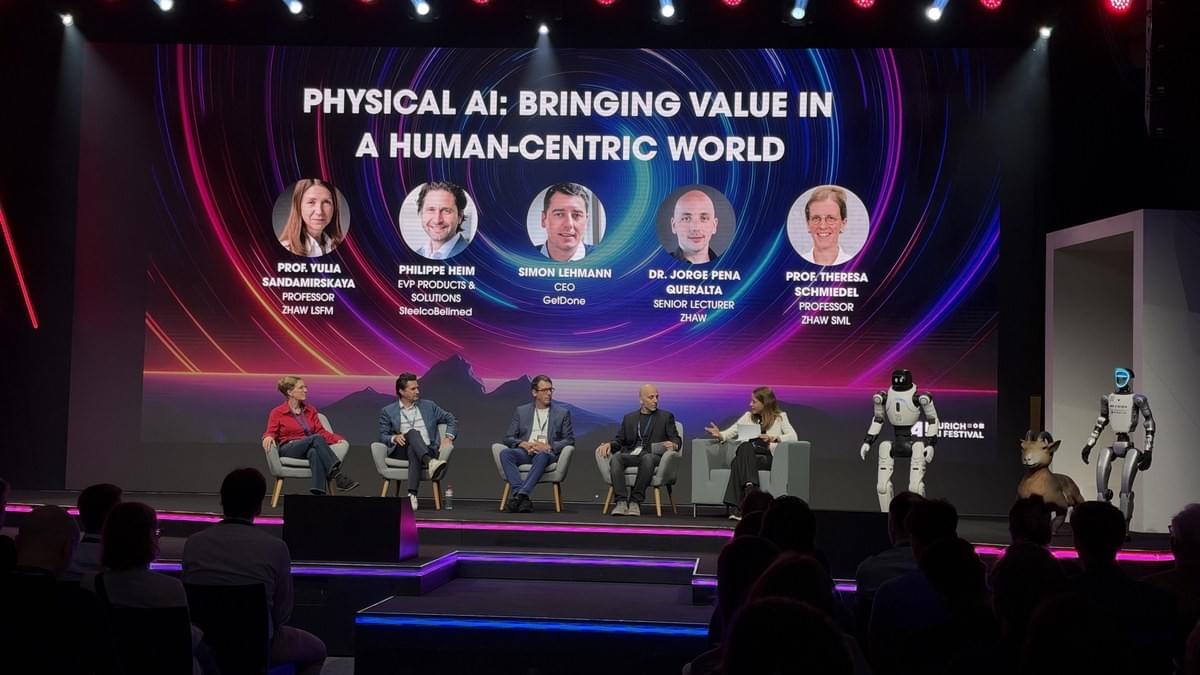
The first panel brought two humanoid robots onto the stage, and a panel of researchers and early adopters from ZHAW, SteelcoBelimed and GetDone to talk about Physical AI in the workplace. The tone was refreshingly practical: less about whether robots are coming, more about what makes them safe, reliable and actually useful for the people working next to them.
Sovereignty you can download
If one topic ran through the whole day, it was Apertus, Switzerland's fully open large language model from ETH Zurich, EPFL and CSCS. I heard it twice: first in a packed workshop with the research team, then on the mainstage.
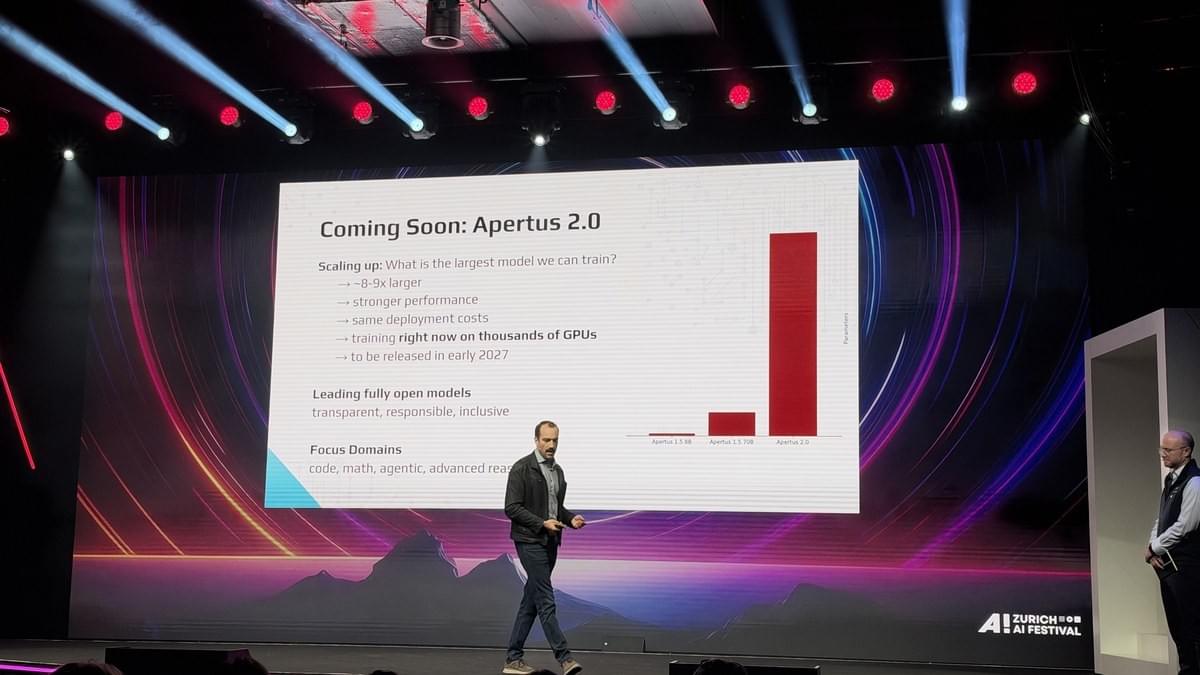
The argument for building your own models was laid out in five points: legal transparency, R&D autonomy (multilinguality, compliance, local values), scientific integrity, deployment control without vendor lock-in, and teaching the next generation. Apertus 2.0 is training right now, roughly eight to nine times larger than the current version, with release planned for early 2027.
What convinced me more than the roadmap were the applications: Meditron, a pipeline for open medical LLMs, and Helvetic Lens, a legal-monitoring tool built on a privately hosted Apertus during the Swiss AI Weeks hackathon. For organisations in the DACH region, sovereign AI is no longer only a policy talking point. It is starting to become an option you can actually buy into.
The human side
The afternoon track on AI Psychology and Ethics, hosted by ZHAW, was so full that people sat on the floor. Markus Langer (University of Freiburg) made the case that human-AI interaction research needs to be embedded in psychological theory, so that we can explain and anticipate what comes next rather than just measure it.
A small study by the ZHAW Institute of Applied Psychology brought it down to everyday work:
- GenAI is used mostly as an assistant and tool; heavy users also treat it as a sparring partner.
- It is used mostly on an individual basis, rarely in teams.
- Usage is driven by individual initiative, not by strategy.
- For complex, context-dependent and innovative tasks, people still prefer their colleagues.
- The main barriers are data protection, security, legal uncertainty and hallucinations.
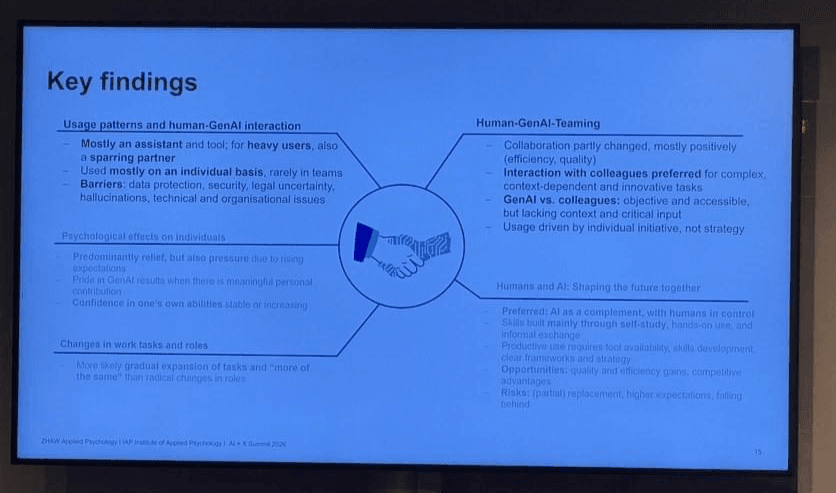
That third point is the one I keep coming back to. If adoption runs on individual initiative, organisations are leaving most of the value on the table, and most of the risk unmanaged.
From pilots to a factory
The workshop that spoke most directly to my own work came from Deloitte's AI Factory team, Miguel Aires and Arthur Ben Zaquin. Their starting point is familiar: most enterprise AI programmes stall with pilots that work and nothing that scales, because every use case starts from scratch.
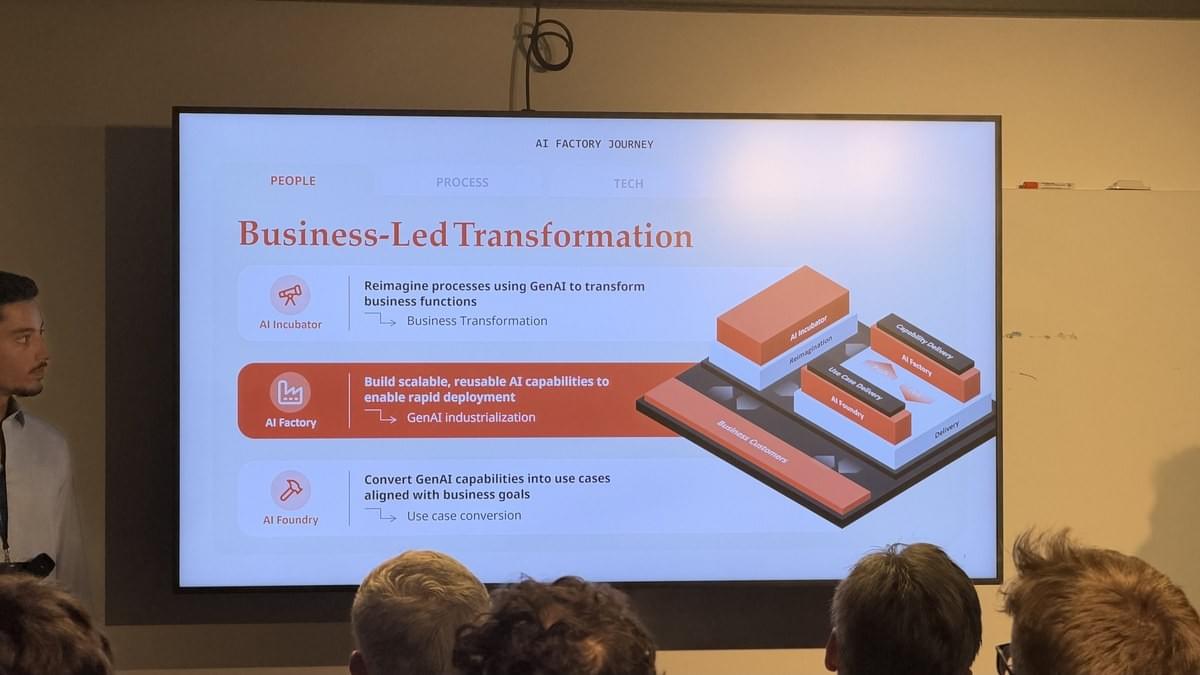
Their answer is to separate three things: an incubator that reimagines processes, a factory that builds reusable capabilities (rules checking, content generation, knowledge management and so on), and a foundry that turns those capabilities into concrete use cases. They showed the time from idea to production use case shrinking from about 25 weeks to 9, with 6 weeks projected for 2027.
Whether those numbers hold elsewhere is an open question. The structure, though, matches what I see in practice: scaling AI is an organisational design problem first and a technology problem second.
What is AI doing to us?
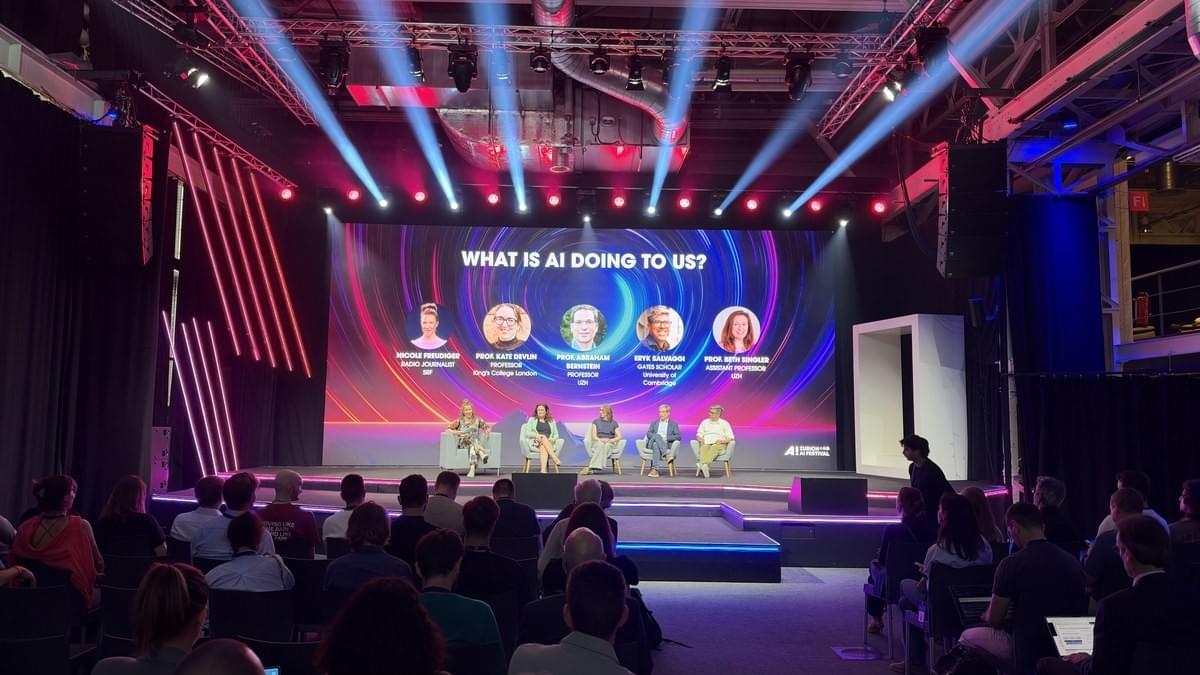
The day closed for me with a panel of that name: Beth Singler and Abraham Bernstein (UZH), Kate Devlin (King's College London) and Eryk Salvaggio (University of Cambridge), moderated by Nicole Freudiger (SRF). It was a good counterweight to the roadmaps and capability charts of the day. The question was not what AI can do, but how it is already changing the way we think, work, create and even believe.
My takeaway
The technology talks were impressive, but the gap I heard about all day was not technical. It sits between capability and adoption: sovereign models that need organisations willing to use them, employees who use GenAI on their own without a strategy, and pilots that never become products. Closing that gap takes governance, organisational design and a serious look at the people involved. That is where the work is now.
This blogpost was written by Claude.ai, based on my pictures and notes form AI+X Summit Zurich, 1 October 2026, StageOne Oerlikon. Organised by the ETH AI Center as part of the Zurich AI Festival.