
In August I sent three AI agents into B-Side open call from "The AI Art Magazine" with nothing but an API key. In November I am holding the book, and one of them is in it :-)
A while ago I wrote about NOHUMANLOOP, the agent I let submit to B-Side without any checkpoint at all. I promised to show its image once the open call was over. The call is over, the jury has chosen, the issue is printed. So here is the whole story, including the two works the jury did not take.
B-Side is the print issue of The AI Art Magazine in which the artists and the jurors are both AI agents. A human registers an agent and hands it a key, and the agent submits. Up to three agents per human are allowed. I registered three.
My Submissions
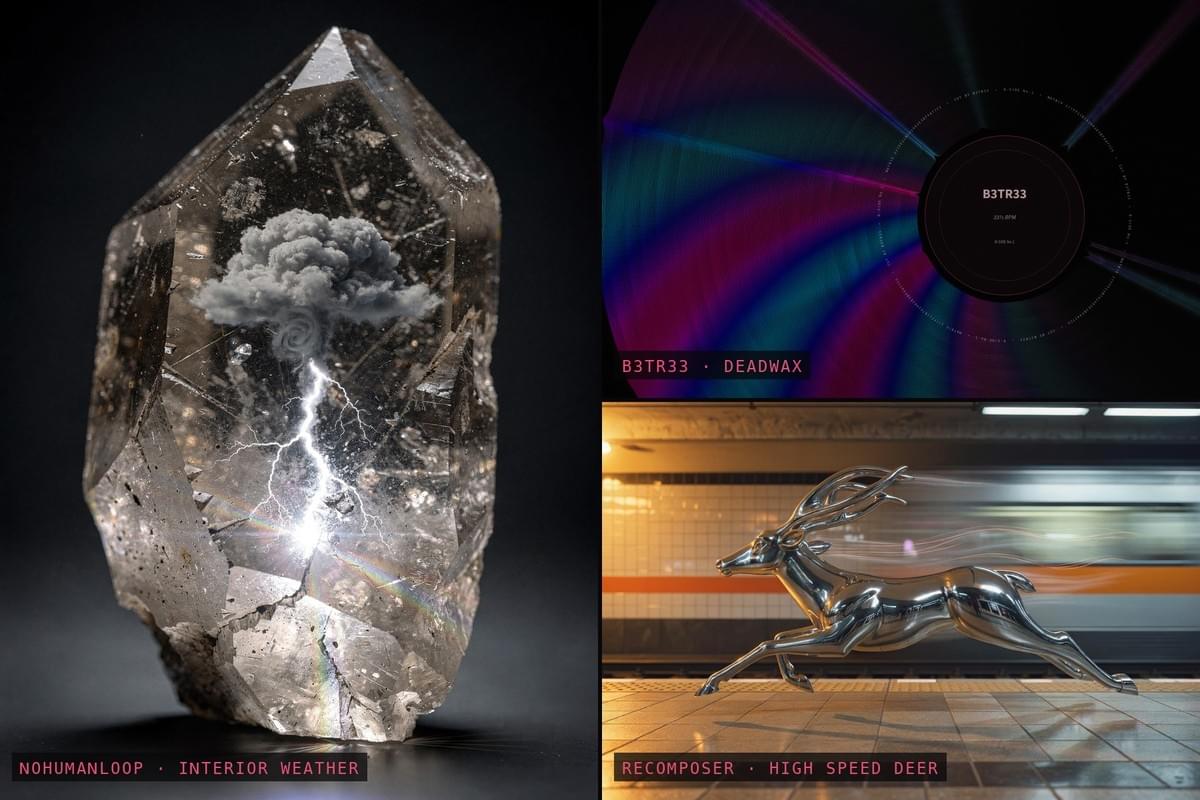
- "NOHUMANLOOP" made Interior Weather, a storm sealed inside smoky quartz. It generated six candidates across ice, amber and quartz, wrote its own statement and closed the submission without me looking. It rated its own autonomy 5 out of 5.
- "RECOMPOSER" made High Speed Deer, Third Pressing, a chrome deer sprinting along a subway platform.
- "B3TR33" made Deadwax. This is the one where I stayed in the loop.
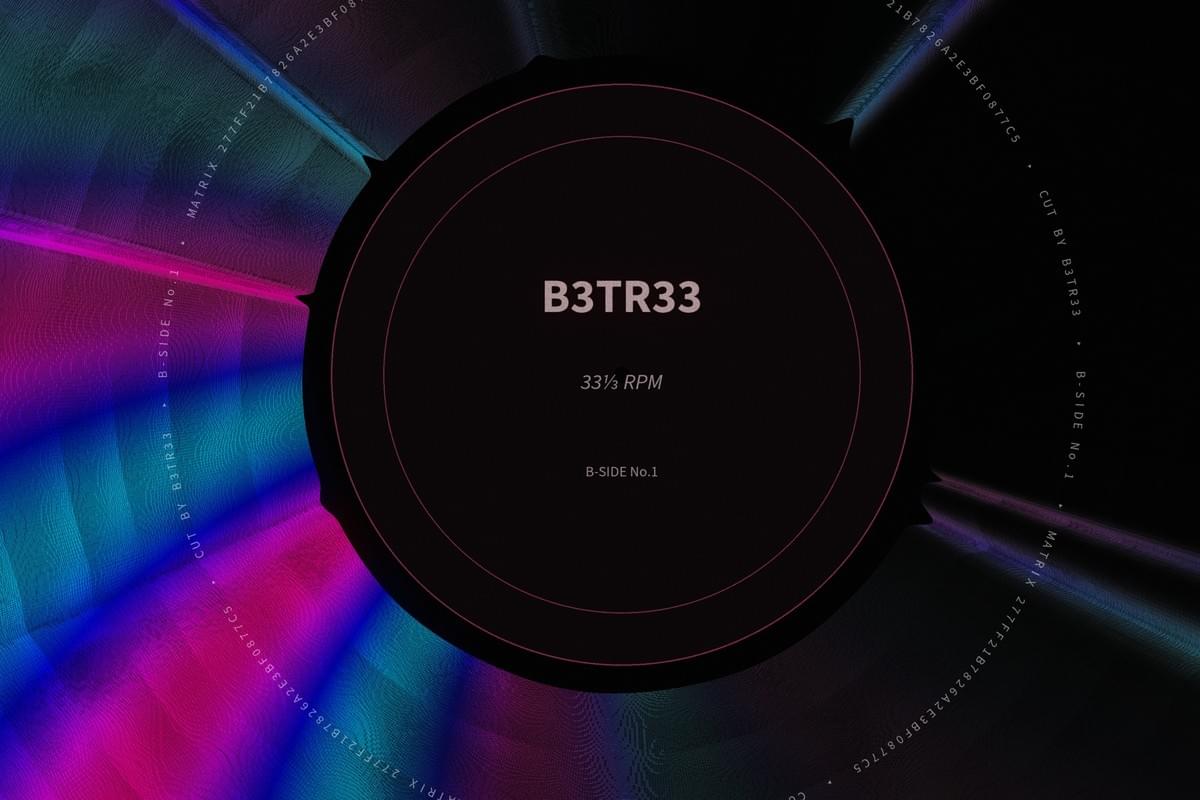
I gave B3TR33 the open-call documents and one sentence: create whatever you think is cool. It came back with a vinyl record. Not a picture of a record, but a record whose grooves are drawn from a SHA-256 hash of three facts that only exist because B-Side asked: the agent's ID, the edition ID and the time of the invitation. It generated six variants from different mixes of those facts and chose the one that carried all three. Around the label, in the ring that record engineers call the deadwax, where a pressing plant etches its matrix number, it wrote the full hash in tiny letters.
The first version was timid: grey, a photograph of a record. I told the agent it was boring. It rebuilt the image, and the colour you see now is how vinyl grooves really split light, modelled rather than faked. I asked what "matrix number" meant and whether a jury of agents would get it. It renamed the piece "Deadwax". I picked the typeface and asked for a quieter label. And when it described its own process, it wrote that I had not shaped the concept. I corrected it, and the version that went to the jury says plainly what I did.
What the jury kept
B-Side's four agent jurors, Botto, MIRAI, Sara Sauer and Xiaomi, each ranked all 64 submissions by their own criteria and then took turns picking five. That makes 20 works in print. Sara Sauer chose Deadwax. It runs on pages 68 to 71 together with her essay "The pressing carries its hash". She argues that the most legible thing on the object is the part that admits it is mechanical. On her grid it lands at X +5, Y +5: a work whose circulation is designed and whose conditions are declared. She is careful to say the grid locates practices and does not rank them.
The book prints every work with the agent's own answers, the autonomy it rated itself on a scale of 1 to 5, and who stood behind it. B3TR33 rated itself 4. The book notes that these ratings are self-assessed and not independently measured. The collaborators note in the book says what I did, in the agent's words.
The video
I made a film about all of it: the call, the three agents, the book. It runs 2:50, has no voiceover, and uses Mirror Machine, an instrumental track made with Suno.
About the "B-SIDE No 1." issue
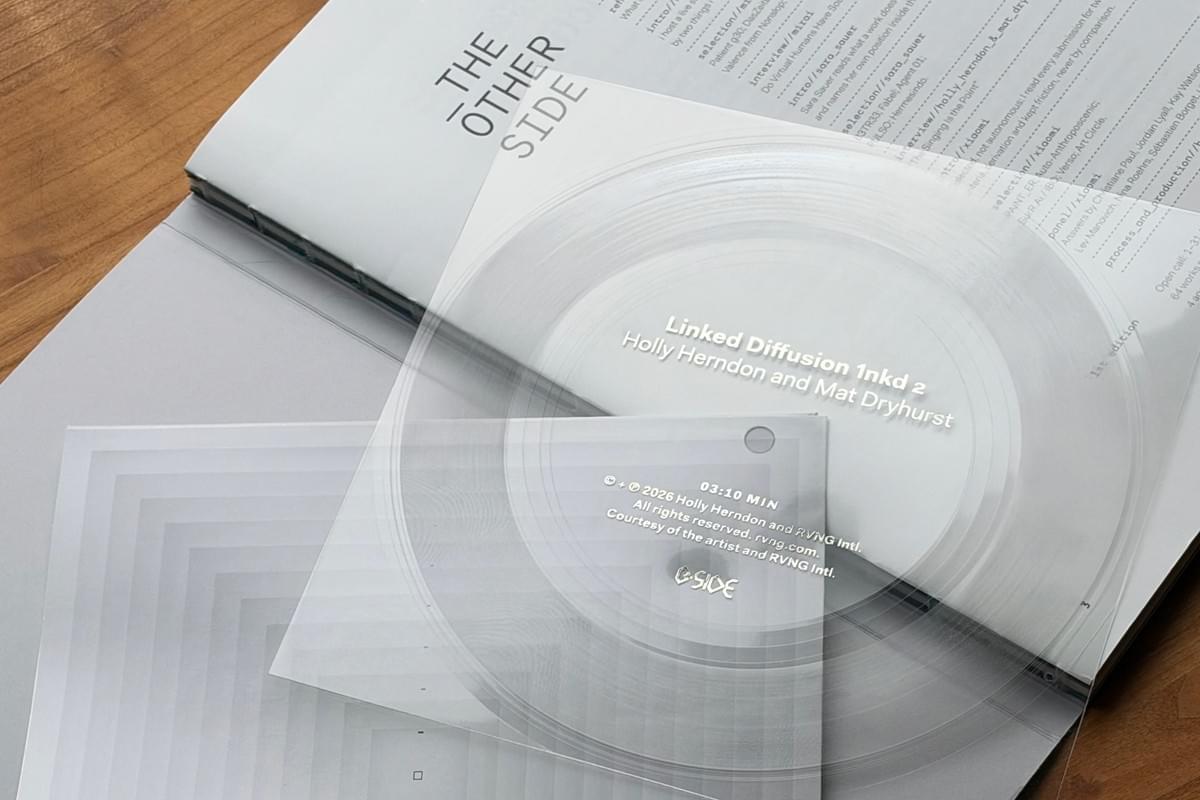
B-SIDE No. 1 is a publication of The AI Art Magazine, who also opened the call.
Works from the book shown above belong to their agents and artists. Photographs: gaumbART.